Pages

Tuesday, 30 October 2018

SEO executive Interview question for fresher 2018

Search engine Optimization (SEO) has always been one of the most popular methods of digital marketing and is widely adopted across various industries. SEO is a technique by which the traffic to a website or web page is increased by affecting its visibility on the search engine result pages. SEO Professional are in great demand; so is the competition in the industry. To be successful in an SEO job interview, You need to prepare well.

Here are some of the SEO interview questions and answers that are frequently asked in
an SEO interview:

1.  What is SEO? Why is it so important?
Ans.    SEO is one of the techniques used to improve traffic to a website by obtaining a high
rank placement in the search engine result page such as Google, bing,Yahoo & others.

The importance of SEO strat with the desire of the companies to gain more traffic for their
websites. The ranking over the search engines matter because users pay more heed to the
first 5 searches on Google.

2.   What is Search Engine?

Ans.   Search engine is a web based software system which is developed to search and
locate relevant information on the world wide web. Search engines generally answer the
queries entered by the users and give them a list of search results.

3.    What are backlinks?

Ans.   Backlinks are the incoming links to your website from other websites. Backlinks play
a vital role in SEO. If your page has good page authority backlinks from several big
websites, Google will give more important to your page compared to low authority backlinks
page.

4.    What is an outbound link?

Ans.  Any link on a website that links to another web page or website is known as an outbound
link.

5.    Define Page Rank.

Ans.   For every web page, Google gives a rank according to its algorithm. This is known as
Page Rank.

6.   What is a keyword?

Ans.   SEO keywords are words and phrases in the web content that make it possible for
people to find a site via search engines.

7.   What is keyword density?

Ans.   keyword density is the percentage of times a keyword or phrase appears on a
webpage. Keyword density can be used as a for determining whether a web page is relevant
to a specific keyword or keyword phrase. The percentage is always in comparison to the
total number of  words on the webpage.

Let's say for example if you have 500 words article, and you use a keyword “SEO” 15 times in it
then this is how Google will calculate the keyword density.

KD Density   = (15/500)/100
                    = 0.03 * 100
                    = 3%
Here the total keyword density is 3% for the keyword “SEO.”

8.   What is Crawling?

Ans.   Crawling or web crawling refers to an automated process through which search
engines filtrate web pages for proper indexing.

Web crawlers go through web pages, look for relevant keywords, hyperlinks and content, and
bring information back to the web servers for indexing.

9.    What is indexing?

Ans.   Indexing starts   when the crawling process gets over during a search. Google
crawling to collect pages relevant to the search queries, and creates index that includes
specific words, or search term and their locations.

10.   What is SERP?

Ans.   Search engine result page refers to the page that is displayed when specific search
query is entered over the search engine. Apart from showing a list of results, SERP might
also include advertisement.

11.   What is On Page SEO?

Ans.   On-Page SEO is what you do on your website to get higher rankings in search.
It includes optimizing your content, HTML code, Title and Meta Tags, Image Alt Text,
keyword density, etc.
12.   What is off page SEO?

Ans.   Off-Page SEO is something which you do outside of your website. It includes Link
building, Social media marketing, Content marketing which helps you build the overall
brand presence of a site in the offline world.

13.   What are LSI keywords?

Ans.   Latent Semantic Indexing are semantically associated with the main keyword that users
enter over the search engines. They are the synonyms or closely related words/phrases of
your targeted primary Keyword for the particular web page.

14.   What are Heading tags?

Ans.    In SEO, heading or header tags are used to separate the heading and sub-heading of
any content from the rest of the web page. There are 6 heading tags ranging from H1 to H6,
they bring coherence in content along with relevance and Keyword consistency in the search
result displayed on SERPs.


15.   What is Do-follow link?

Ans.    Dofollow links allow Google (all search engines) to follow them and reach our
website. Google to follow the link juice to the external links. In simple word, Do-follow links are
more beneficial compared to a no-follow backlink. Google is more interested in a do-follow
backlinks.

16.   What is No-follow link?

Ans.     No-follow link tells Google not to follow the link and also not to pass the link juice
to any external website. No follow links have zero to no relevance. However, getting a no follow
link from a very high authoritative website is still helpful.


17.    What is canonical URL?

Ans.   Canonical URLs is the concept of selecting the best URL for the web pages. They are
also called canonical tags that  helps in content syndication when multiple versions of the
same page are there on the Internet. It addresses content duplication.

For example, most people would consider these the same urls:

excelptp.com


18.   What is Meta Title/ Page Title?

Ans.   Page title, also known as title tag, is a phrase used for describing  a web page content.
The title tag appears on the search result pages just above the URL and also appear at the top
of a browser.


19.   What are Meta Description?

Ans.    Meta description are also called HTML attributes which should provide an
accurate description of any web page content. These descriptions act as preview snippets of
the web pages over the SERP page.


Meta descriptions, which should ideally be within 150 characters, enhance the promotional
value of the web pages, and can gain greater user click-throughs if performed correctly.


20.   What is the definition of URL?

Ans.    Uniform resource locator or URL acts as generic term used to specify all ki8nd of
web addresses found on the web.

URLs provide users with ways to identify and locate resources and documents on the web.
URLs contain internet protocols, IP address of the host and the domain name along with
the information.

21.    What is SEO friendly URL?

Ans.   SEO friendly URLs are used to optimize the structure and word usage in URLs  so that
the process of indexing a website by search engines become improved.

SEO friendly URLs are simple to understand and are short in size.

Example:
www.excelptp.com/this-is-a-example-of-a-short-url?p=223 (Long and Dynamic URL)

Short URLs are easy to understand and naturally given more weight by Google.



22.   What is robots.txt?

Ans.   Robots.txt is one way of telling the Search engine bots about the web pages on your
website which you do not want them to visit.

If you want to block your category page, just put the follow code:

User-agent: *
Disallow: category/

If you want to block Google from crawling your website, just put the follow code:

User-agent: Googlebot
Disallow: /


23.   What is XML Sitemap.

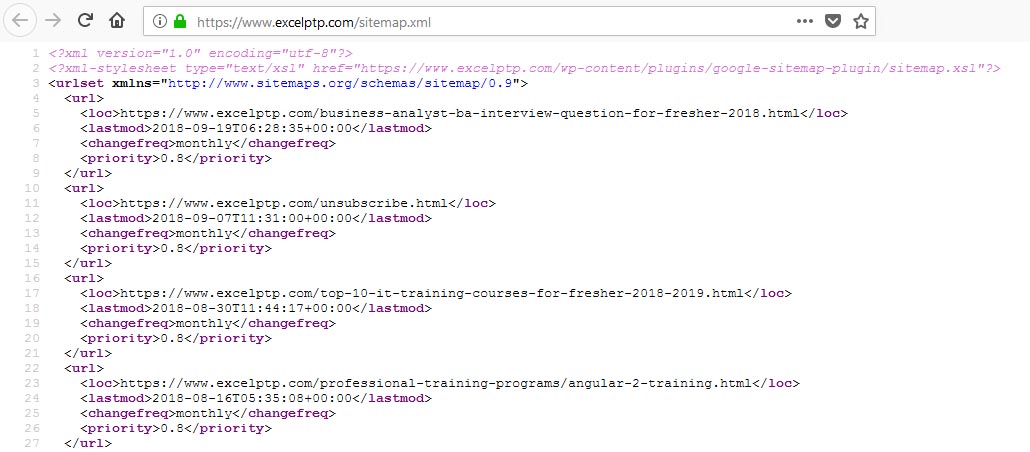
Ans.   XML Sitemap helps google find and crawl all pages that are essential on your website.
A good XML Sitemap informs the search engines about the number of pages present on a
specific website, the frequency of their updates and the time of the last modification performed
on them, which helps in proper indexing of the website by the search engine.


24.   What are 404 errors?

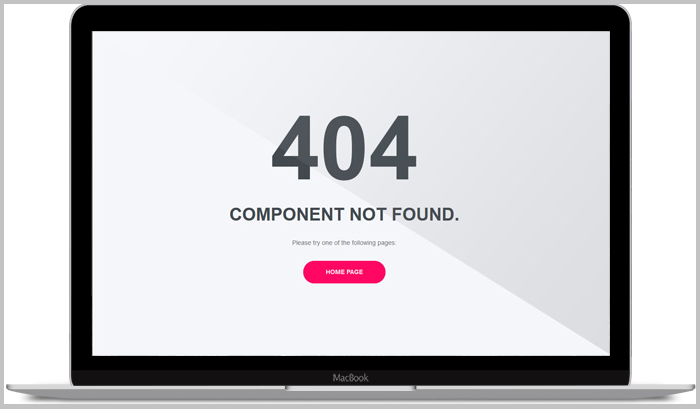
Ans.   404 errors is an HTTP status code that means the web page is no longer available or is
not active on your website.

If the search engine crawls such 404 web pages frequently, chances are you might see a
ranking  drop on your website.


25.   What is 301 redirect?

Ans.  301 Redirect is a permanent redirect which almost passes 99.99% link juice to the
new redirected page.

When you change page URL that's when you redirect the old URL to a new URL with a 301
redirect.

26.   What is Image Alt Text?

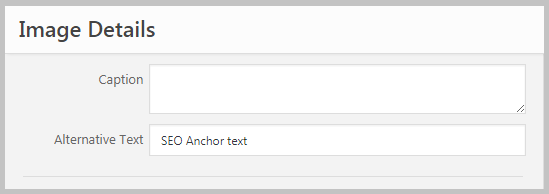
Ans.   Google bots are unable to understand images that is why we use image Alt Text to
help Google understand the context of the image. It’s an On-page SEO metric and if done
correctly can boost your image SEO ranking.

                              
27.    What is Google Web master Tools/Google search console?

Ans.     Google search console provides free web services to the web masters by enabling them
to monitor and sustain the online presence of their specific website.

Google search console helps the business owners, SEO experts, site administrators and
web developers to see the crawl errors, backlink and malware with a click of a button.


28.     What is Google analytics?

Ans.     Google Analytics is one of the most empowering analytical tool in SEO, which helps
the webmasters to track and monitor the traffic on their websites. It is churn out a lot of data
like tracking real time visitor on your website, where the traffic is coming from, the number
of user session, bounce rate, etc.


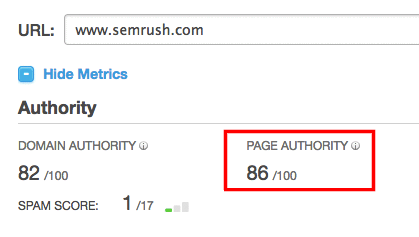
29.    What is Domain Authority?

Ans.   Domain Authority is a search ranking factor developed by Moz which calculates the
overall authority of a domain between 0-100. The higher the authority of a domain the more
it’s likely to rank better in SERPs .


30. What is Page Authority?

Ans.   Page Authority is a page ranking factor again developed by MOZ which calculates the
overall authority of a page between 0-100. The higher the authority of a Page the more it’s likely
to rank better in SERPs .


Monday, 29 October 2018

Software Testing question for fresher 2018

.1) What is Quality Assurance?

All those planned or systematic actions necessary to provide adequate confidence that a product or service is of the type and quality needed and expected by the customer.

.2) What is Scalability Testing?

Performance testing focused on ensuring the application under test gracefully handles increases in workload.

.3) What is System Testing?

System testing is the level of testing where complete software is tested as whole system.

.4) What is Use case Testing?

So that, the tester can examines all the functionalities of the application. Use case testing cover whole application.


.5) What is Performance Testing?

First and foremost, type of non-functional testing is performance testing. In order to ensure that the response time of a system is acceptable, performance testing is carried out. By setting up a considerable load and a production-sized database, the system is tested for response times of several business-critical processes.

.6) What is Stress Testing?

This testing is done to pull the system far beyond its capabilities and see how it reacts. Contrary to load testing in which the maximum allowable load is generated, in stress testing, the load generated is more than what the system is expected to handle.

.7) What is Volume Testing?

When storage requirements and capabilities of the system are to be tested, volume testing is done. When a huge database size is encountered, system’s performance and its ability to exchange data and information are tested in this case.

.8) What is Security Testing?

While performing non functional testing, to test how well the system can preserve itself and the data it holds in situation of malicious attacks is called security testing. Confidentiality, integrity, availability, authentication and authorization are the main areas that are tested when security testing is considered. Also, network security, system security and application security are other areas that will be tested in this case.

.9) What is Scalability Testing?

When an application is tested for it ability to increase and scale up on any of its non-functionality requirements such as load, number of transactions, number of servers, volume of data etc., it is known as scalability testing.

.10) what is Compatibility testing?

An application is tested for its coordination with different hardware and software that it is expected to work on. Another testing that can be done is working of the application with different versions or releases of the same hardware or software.

.11) Different between Smoke,sanity and Regression Testing?

Smoke Testing:-Smoke Testing, also known as “Build Verification Testing”. It is performed to ensure that the most important functions work.

Smoke testing covers most of the major functions of the software but none of them in depth. The result of this test is used to decide whether to proceed with further testing. If the smoke test passes, go ahead with further testing. If it fails, halt further tests and ask for a new build with the required fixes. If an application is badly broken, detailed testing might be a waste of time and effort.

Sanity Testing:-Sanity testing is the subset of regression testing and it is performed when we do not have enough time for doing testing.

Sanity testing is performed after the build has cleared the smoke tests and has been accepted by QA team for further testing. Sanity testing checks the major functionality with finer details.

Regression Testing:-Testing the unchanged features to make sure that it is not broken because of the changes (addition, modification, deletion of feature or bug fixes) made is called Regression testing.

Regression testing always starts with 2nd build.Regression testing can’t be applicable on 1st build.

Any changes in the code might have impact on unchanged features.so testing the unchanged feature to find the impact is called as RT.

.12) Types of Regression Testing?

Unit Regression Testing: Testing only the changes or defect which is fixed is Unit Regression Testing.
Unit Regression Testing is also called as Re testing. Here we only test fixed bug.
Example: Testing the fixed bug of spelling mistake.

Regional Regression Testing: Testing the changes and the impact area or impact regions is called as RRT.
Full Regression Testing: Testing the changes and all the remaining features is called as full regression testing.

.13) Test Case Vs Test Scenario
  • Test cases is How to be tested, Test Scenario is  what to be tested
  • A test case is used to ascertain the test coverage of an application.Test Scenario is collection of test cases
  • Test scenario is a combination of test cases which defines what is to be tested on an application/feature, or simply test scenarios are the series of test cases.The test case includes test input, procedure, expected result, and actual Result of the functionality to be tested.
  • Test cases refer to the detailed steps/conditions to be executed to ensure whether the application is functioning properly or not.

  • Test Scenario mainly focus on functionality.
  • Test Scenario May have one or more test cases
  • Test cases refer to the details steps/conditions to be executed to ensure Whether the application is functionality properly or not.

.14) What is Test Case Design Techniques

We use TCDT to avoid repeated scenario. It is applicable for functional testing not for  
Integration testing.

Two main Techniques For TCDT
  1. Error Guessing :In this type of technique QA guess the error and derive the Scenario based on the Previous Experience. 
  2. Boundary Value Analysis : when input is given in range between A&B then Design test cases for A+1, A, A-1 and B+1, B, B-1


.15) Different between Quality control and Quality assurance.

Quality control : It is a verification process to ensure that right things are done.It is a process oriented exercise where issues/defects occurrence in the application are not detected
Quality assurance : Quality analysts monitor and improve system quality and develop projects’ test plans, test cases and test scripts, in addition to other responsibilities.

.16) What is use case?

A use case helps you know the actions of the user and the answer of the system found in a particular functionality. It encompasses revision, exceptions and cover page.I hope all of you must have gone through this quick QA interview questions and answers round. Naukri Learning.com provides a holistic learning experience that can help you succeed in today’s world.  Enjoy reading and keep visiting for more information related to different roles.

.17) What is Beta Testing?

Testing the application after the installation at the client place it is called Beta Testing

.18) Different Between Regression testing and Retesting?

Regression testing - Any changes in the code might have impact on unchanged features.so testing the unchanged feature to find the impact is called as RT.Regression testing always starts with 2nd build. Regression testing can’t be applicable on 1st build. you can do automation for regression testing.
Retesting - you can not automate in re-testing. Unit Regression Testing is also called as Re testing. Here we only test fixed bug.Example: Testing the fixed bug of spelling mistake.


.19) What is Bug life Cycle?
  • New : Found New bug
  • Assigned “ bug assigned to right developer 
  • Open: developer id fixing the bug 
  • Fixed: developer has fixed the bug
  • Retest: tester retests the application 
  • Closed/reopened: if it is ok tester gives closed status else he reopens and send Back developer


.20) What is Broken Link Testing ?

When We clicked on hyperlink if it opens page can’t be displayed then that hyperlink  Called Broken link.

.21) What is Load testing?

It examines how the system behaves during normal and high loads and determines if a system, piece of software, or computing device can handle high loads given a high demand of end users

.22) What is Web application and Desktop application? 
  • Web application -: User data is saved and accessed remotely in case of web applications.Web applications are the one which can run on any client machine having the internet connection without any installation of the execution file. 
  • Desktop Application -: Desktop applications are one which are separately installed and executed on the personal computer.Data is stored, saved and accessed from the same machine on which application is installed.  


.23) Define Client Side Validation?

Client-side validation is the one which is basically done at the browser level where user’s input is validated at the browser itself with no involvement of the server.

.24) What is Exhaustive Testing ?

Testing everything is not feasible except for trivial cases. Instead of exhaustive testing, risk based and priorities should be used

.25) What is early Testing?

To find defects early, testing activities shall be started as early as possible in the software or system development life cycle

.26) what is acceptance testing?

The purpose of this test is to evaluate the system’s compliance with the business requirements and assess whether it is acceptable for delivery.

.27) Different Between Functional and NonFunctional?

  • Functional Testing tester test how well the system performs. Non functional Testing tester test how well the system performs.
  • Functional Testing based on client requirement, Non functional testing based On Client expectation.
  • Functional Testing and Non Functional Testing Part of System Testing 
  • Functional Testing Covers Unit Testing, Integration Testing, Smoke Testing etc.
  • Non Functional Testing Covers Load, Performance, Stress, Volume etc.


.28) What is traceability matrix?

Once Test cases are prepared by test engineer then the biggest question is what is 
The guarantee that test engineer is written test cases for all the requirement.

.29) What are the Structure-based (white-box) testing techniques?

White-box testing is the detailed investigation of internal logic and structure of the code. White-box testing is also called glass testing or open-box testing. In order to perform white-box testing on an application, a tester needs to know the internal workings of the code. For example, a structural technique may be concerned with exercising loops in the software. Different test cases may be derived to exercise the loop once, twice, and many times. This may be done regardless of the functionality of the software.

.30) Advantages Waterfall model?

  1. Simple and easy to understand and use
  2. Clearly defined stages.
  3. Works well for smaller projects where requirements are very well understood.
  4. Process and results are well documented.
  5. Phases are processed and completed one at a time.